Seeds
Chia Seeds
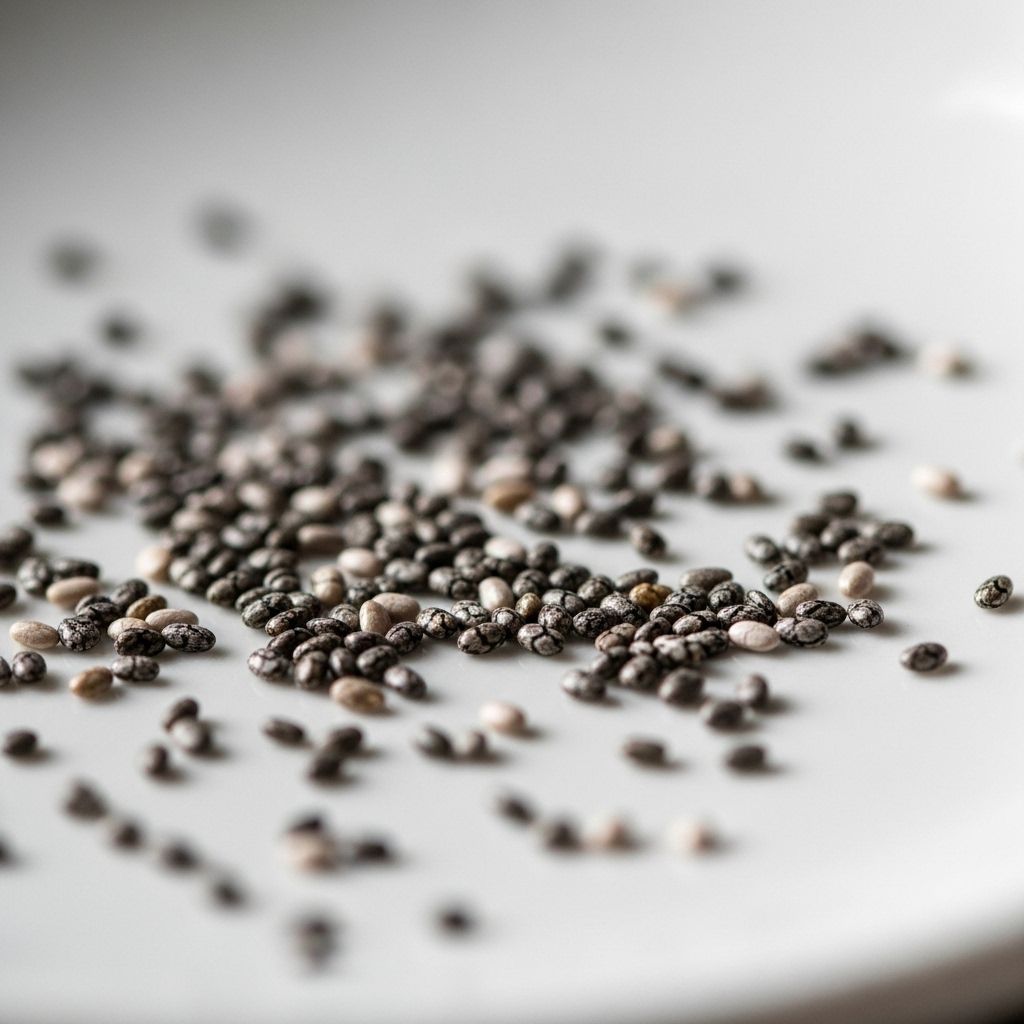
Chia seeds (Salvia hispanica) are small seeds originating from a plant of the mint family, historically cultivated in Central America. They are notable for their unusual capacity to absorb water — forming a gel-like matrix when hydrated — and for their dense concentration of nutrients relative to their size. In contemporary nutritional science, chia seeds are documented as a source of alpha-linolenic acid (ALA), a plant-derived omega-3 fatty acid, as well as soluble and insoluble dietary fiber, calcium, phosphorus, and manganese.
-
Soluble fiber source: The mucilage formed when chia seeds are hydrated is composed primarily of soluble fiber, which is associated with regulated glucose absorption and extended satiety in the hours following a meal.
-
Plant-based omega-3 fatty acids: Chia seeds contain one of the highest concentrations of ALA among commonly consumed plant foods. ALA is a precursor to longer-chain omega-3 fatty acids, though the conversion rate in humans is variable.
-
Mineral density: By weight, chia seeds contain meaningful quantities of calcium, phosphorus, and magnesium — minerals involved in bone structure and metabolic function across multiple physiological systems.